Bend lays out new equity plan amid fallout from director’s resignation
Published 5:40 am Thursday, March 5, 2026
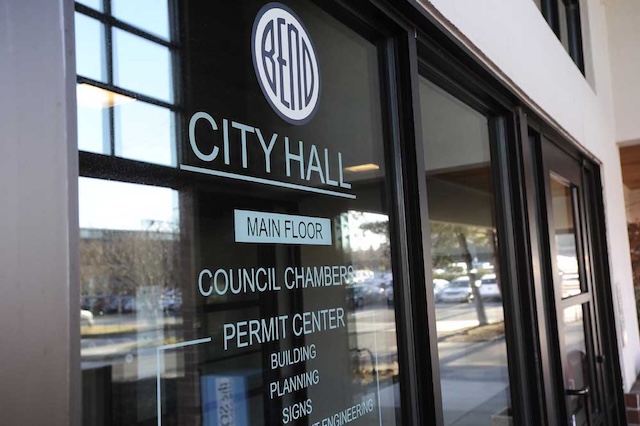
In December, Katherina Barguil wrote an email to more than 100 people across Central Oregon — community organizers, nonprofit leaders, business owners and others — letting them know her last day as a staff member with the city of Bend would be Jan. 15.
They were people Barguil, a community relations manager, had worked with during her time at the city. Her role was focused on making sure historically marginalized communities were included in the city’s processes and events.
“I am thankful to have supported, collaborated, and hosted programming and initiatives alongside you for comunidad that have been historically underresourced and underrepresented in Central Oregon,” said Barguil, who is mixed-race Latina. “It has been an honor to earn your trust and partnership, and to witness your resolve amidst these challenging times.”
Her resignation marks the second time in recent months a staff member focused on equity work has left the city, although Barguil’s was the less dramatic of the two.
In a September resignation letter, former equity and accessibility director Andrés Portela described an “unsafe, inequitable, and professionally hostile environment” where repeated incidents of discrimination and racism made it “untenable” for him to remain. He left with an $86,000 settlement for him to agree not to sue the city.
Then, the city commissioned an internal investigation that cleared the city of wrongdoing and slammed Portela’s credibility, calling his accounts “implausible.”
Barguil told The Bulletin she left partially as a result of the way the city handled the incident and its effect on the community.
Community leaders and activists have spoken out in recent months, calling for the city to do more for inclusivity. As Diversity, Equity and Inclusion programs face rollbacks across the nation, the city hopes the help of an outside expert will provide a framework for supporting staff to lead local DEI efforts amid the turmoil.
Barguil said that following Portela’s resignation, “I found myself in conflict with the messaging I was hearing from individuals within the city, the external messaging and actions that had taken place after (Portela’s) resignation, and the frustration and hurt I was hearing from community members, not just about the investigation, but about other ways in which community members have felt wronged by staff, leadership and council at the city.”
She declined to comment on specific examples.
“It is an isolating experience to be an employee of color at the city,” Barguil added.
She grew up in New York and got a civil engineering degree from Columbia University. She was an engineer with the city for three years before stepping away and then coming back in a different role.
“Qualitatively and quantitatively, the city and many times our community can present as an unwelcoming environment to people of color, and more broadly to those who are marginalized,” she said.
Resignations and pushback
In addition to Barguil, Fenix Van Tassel — a member of the Human Rights and Equity Commission, a policy advisory group appointed by the mayor and city council — resigned in December. In a letter to the city, Van Tassel wrote that hiring a white woman to investigate Portela’s racial discrimination claims was “completely out of touch with reality for reasons obvious to most.”
“My resignation is a statement of principle,” Van Tassel wrote. “I urge the city to reflect deeply on this failure and take immediate, transparent steps to align its practices with its stated values.”
Leaders in Bend’s BIPOC communities spoke up at a commission meeting in January, expressing disappointment and calling for the commission to strengthen equity work.
“When I see things like what has recently happened with the equity director, it scares me,” said Riccardo Waites, founder of internet radio station We Black Radio and founder of the Central Oregon Black Leaders Assembly. “A lot of people have been hurt by what’s happened.”
At the end of that meeting, commissioner Ruth Vernotico called out Bend City Manager Eric King and Mayor Melanie Kebler for creating a “toxic” place to work.
“There needs to be some pulling apart of that mess,” Vernotico said.
Earlier that month, community organizer Joslyn Stanfield, who has orchestrated Bend’s Juneteenth celebrations, launched a petition for the city council to remove the city manager, citing the “marginalization of Bend residents” and actions related to the former equity director. It has gained 240 signatures.
A new path
Amid the fallout, a consultant has been creating a set of recommendations for the city intended to improve the structure of the equity program and set it up for success.
The city contracted with Ben Duncan, consultant and former Chief Diversity and Equity Officer with Multnomah County, who offered to help the city after he heard about Portela’s resignation. That Bend’s equity lead would resign after a relatively short tenure was not unfamiliar for him. He worked with the city’s previous director before their resignation after about two years on the job.
In February the city received an 11-page report with recommendations on structure of its diversity and equity programs.
“The work is happening,” Duncan said told the city council during a presentation on Jan. 28. “Just looking at what the city is currently investing in. There isn’t anything I thought was a glaring miss, in terms of equity efforts across the city.”
Duncan also said there is “plenty of room for improvement.”
In his interviews with city staff, committee and community members, he found there is an “uneven understanding of how equity work is happening across departments.” Some said the work felt transactional or performative, according to Duncan.
At a Jan. 28 work session, Bend City Manager Eric King — a central figure in Portela’s resignation letter — unveiled a new plan for diversity and equity work based on Duncan’s recommendations.
Under the new structure, the equity director position will be moved into the city manager’s office, and a central equity team will work with liaisons to different departments — what the city calls a “hub and spoke” model. In addition to filling Barguil’s role, the city plans to hire another community engagement person to specialize in equity and inclusivity.
“We feel confident that this structure will strengthen our work,” said Jacob Larsen, a spokesperson for the city, in an email. “We also know there is more to do. Becoming a more welcoming and inclusive organization is an ongoing effort, and this updated structure is an important step toward this effort.”
King also said the city was looking at a “comprehensive review” of how to conduct internal staff conflict investigations where identity is the core issue.
Given the history, there are questions about whether the city will be able to fill the equity director role. Councilor Gina Franzosa said in January she was “very concerned” about that.
“If departmental leadership is not understanding they need to be partners in this work, I would hate to put someone else through that,” Franzosa said.
Others are skeptical the city can follow through with the new plan.
“All I want is accountability by means of expertise that is currently not present at the leadership level in the current structure,” said Agatha Ventura, former chair of the city’s Human Rights and Equity Commission, in an email to The Bulletin. “Ben (Duncan)’s feedback being implemented equitably is at the discretion of the same folks who created the environment that led to Andres (Portela) and Kathi (Barguil)’s departures.”
And the city will have to go on without Barguil’s community connections. She took a job working in Bend for Mixte Communications, a San Diego-based public relations firm that focuses on community justice and works for the Confederated Tribes of the Warm Springs.
“I want to recognize the commitment and dedication that Kathi brought to this work every day,” King, the city manager, said in an emailed statement. “Her service to our community has made a meaningful impact. We also want to recognize that people of color are underrepresented and face challenges living in Central Oregon and working at the city. We know there is more to do as we strive to build a more welcoming and inclusive organization. This new model is one step forward in strengthening how we support equity in our organization, and we are continuing to find meaningful and effective ways to support our employees.”
Editor’s note: This story was updated March 5 to correctly identify Riccardo Waites and note that Barguil left the city between her jobs as an engineer and community relations manager.
About Clayton Franke
Clayton Franke covers growth, development and transportation for The Bulletin. A graduate of the University of Oregon's School of Journalism and Communication, Clayton joined The Bulletin in 2024. He was born and raised in Missoula, Montana. He can be reached at 541-617-7854 or clayton.franke@bendbulletin.com.
 More by Clayton